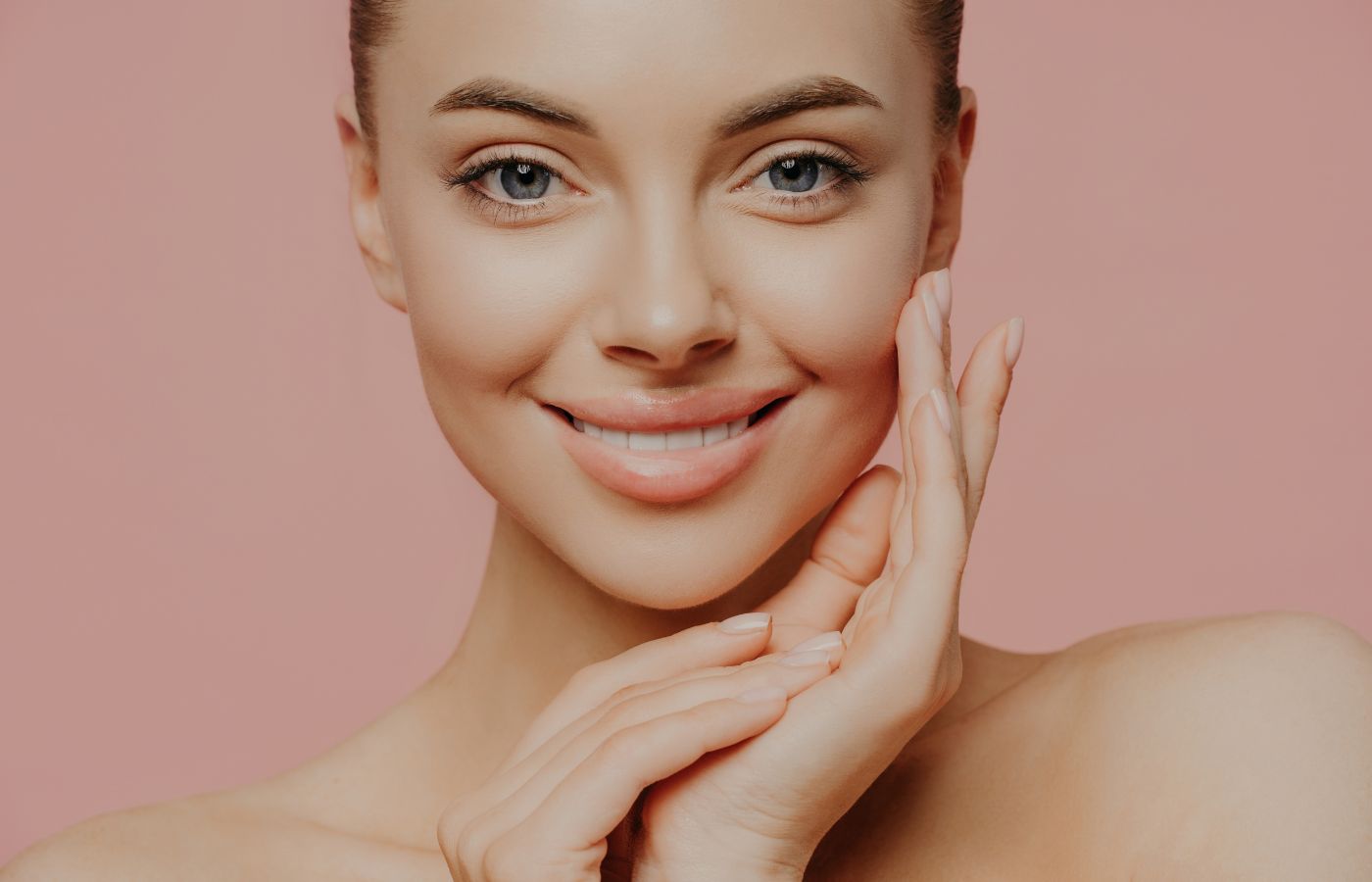
Every product you apply to your skin — serum, foundation, concealer, moisturizer — performs on whatever baseline your skin provides. Change the baseline structurally, and the same products produce different results.
What the canvas is made of
The skin surface is not a uniform substrate. It is a dynamic architecture of cells in different stages of the turnover cycle, varying degrees of hydration, follicular openings, fine lines from collagen decline, and areas of altered texture from accumulated dead cells, subclinical inflammation, or past barrier disruption.
Foundation applied to this surface does not sit on top of it. It fills the lowest points, thins over the raised points, settles into fine lines, and sits differently over congested areas than over clear ones. The product behaves as a liquid on a textured surface — which is exactly what it is. The result reflects the texture of the surface, not just the quality of the product.
Three things that make a better canvas
Consistent cell turnover
When keratinocytes turn over consistently, the surface is renewed at a regular rate. Dead cells do not accumulate in irregular patterns. The surface reads as smooth because it is structurally smooth — not because a primer has temporarily filled the irregularities.
Dermal hydration
Surface hydration produces a temporary plump. Dermal hydration — water held in the glycosaminoglycan matrix of the dermis — produces a slight structural resistance that gives makeup something to adhere to rather than absorbing directly into dehydrated tissue. The difference is visible in how long makeup holds position through the day.
Intact barrier function
A compromised barrier absorbs products faster than they can perform. Primers disappear. Foundations shift. Setting sprays do not hold. When the barrier functions correctly, products remain on the surface long enough to do what they are designed to do.
What changes when the baseline improves
The first thing most people notice after a completed quarterly protocol is not that their skin looks dramatically different bare. It is that the products they have been using for years suddenly work differently. Foundation that previously settled into texture now sits more evenly. Concealer that migrated through the day holds longer. The skin catches light differently in photographs.
This is the canvas effect. The products have not changed. Their formulas, their pigment loads, their finish types — all identical. What has changed is the surface they are performing on. A structurally improved surface produces structurally different results from the same inputs.
Why does my foundation look different on aging skin?+
Foundation performance is determined by the surface it is applied to. As skin loses dermal density, cell turnover slows, and surface texture becomes irregular, foundation settles into texture rather than sitting on top of it. The product has not changed — the canvas has.
Can skincare actually change how makeup looks?+
Yes — when the skincare addresses the structural substrate rather than just the surface. Compounds that improve dermal density, cell turnover rate, and barrier function change how makeup looks durably, because they change the surface itself rather than coating it.
What does it mean for skin to be a better canvas?+
A better canvas has even cell turnover producing a consistently smooth surface, adequate dermal hydration giving the skin resistance that makeup can grip, and intact barrier function preventing products from absorbing faster than they can perform.