GHK-Cu is not a new ingredient. It was identified in human plasma in 1973. What has accumulated since is one of the most extensive bodies of research on any single skin compound — and most of it never reached the skincare consumer.
What GHK-Cu is
GHK stands for glycyl-L-histidyl-L-lysine — three amino acids that form the peptide. The Cu is copper, which GHK binds with high affinity. The copper-bound form is the biologically active version; without the copper, the peptide's activity is significantly reduced.
GHK-Cu is naturally occurring in the body — found in plasma, saliva, and urine. Plasma levels decline approximately 50% between early adulthood and the 60s, a decline that correlates with the visible acceleration of skin aging that occurs across the same period.
What the research documents
Collagen synthesis
GHK-Cu stimulates fibroblasts to produce collagen types I, III, and IV, as well as elastin and glycosaminoglycans. It upregulates collagen synthesis while simultaneously downregulating the matrix metalloproteinases (MMPs) that break existing collagen down.
Angiogenesis
GHK-Cu promotes the formation of new blood vessels — a mechanism relevant to both wound healing and scalp hair follicle support. Improved capillary supply increases nutrient and oxygen delivery to the dermis and dermal papillae.
Gene expression modulation
Research by Pickart and colleagues documents GHK-Cu's effect on over 4,000 human genes — activating genes associated with tissue repair and regeneration while suppressing genes associated with inflammation and cancer progression.
Antioxidant activity
GHK-Cu reduces oxidative stress by sequestering free copper ions that would otherwise catalyze reactive oxygen species production. It also upregulates the body's own antioxidant enzymes including superoxide dismutase.
What topical studies show
Controlled topical studies on GHK-Cu document improvements in skin density, thickness, laxity, and fine line appearance. A 12-week double-blind trial published in the Journal of Cosmetic Dermatology showed statistically significant improvement in skin firmness and density compared to placebo. The compound penetrates the stratum corneum when formulated appropriately and reaches the fibroblasts in the dermis where its primary mechanisms operate.
The challenge with GHK-Cu in most commercial products is stability and concentration. The compound oxidizes rapidly when exposed to air or light. Freeze-dried formulation — activated at point of use — is one of the few approaches that preserves biological activity through to application.
What does GHK-Cu do for skin?+
GHK-Cu stimulates fibroblasts to produce collagen, elastin, and glycosaminoglycans. It promotes angiogenesis, supports antioxidant defense, and modulates matrix metalloproteinase activity. The net effect is a more favorable balance between collagen production and degradation.
How long has GHK-Cu been studied?+
GHK-Cu was first identified in human plasma in 1973 by Loren Pickart. Research has continued for over five decades, with hundreds of published studies documenting its role in tissue repair, collagen synthesis, anti-inflammatory activity, and gene expression modulation.
Does GHK-Cu actually work topically?+
Published studies document improvements in skin density, thickness, laxity, and fine line appearance in controlled trials. The compound penetrates the stratum corneum when formulated appropriately and reaches the fibroblasts in the dermis where its primary mechanisms operate.
What does GHK stand for?+
GHK stands for glycyl-L-histidyl-L-lysine — the three amino acids that form the peptide chain. The Cu refers to copper, which the peptide binds with high affinity. The copper-bound form (GHK-Cu) is the biologically active version.
GHK-Cu in the protocol
The Structure Protocol — Corrective Tier
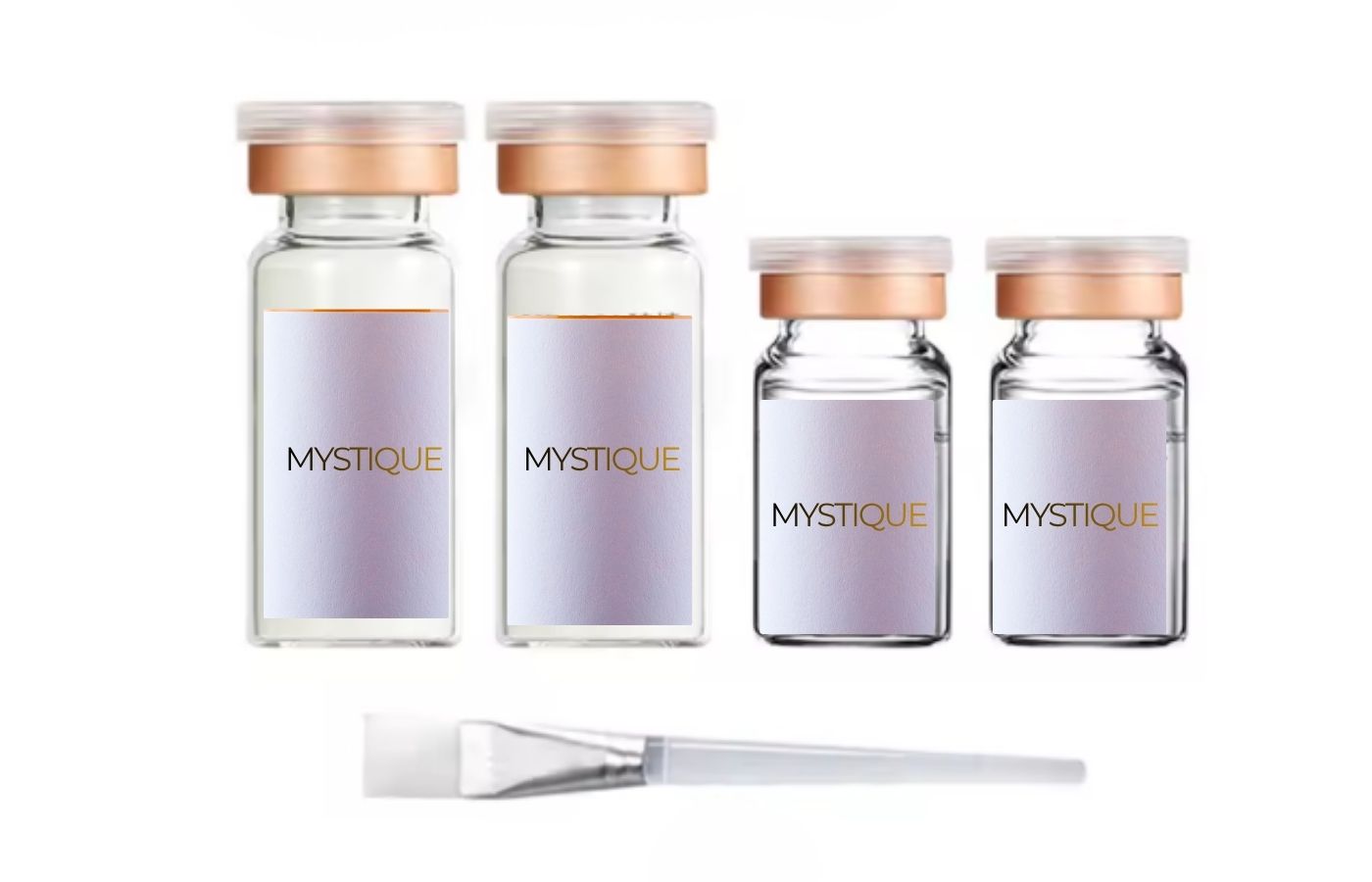
GHK-Cu Complex. Freeze-dried. 12-vial quarterly system. Activated at point of use to preserve biological activity through to application.
Begin the Protocol — $320