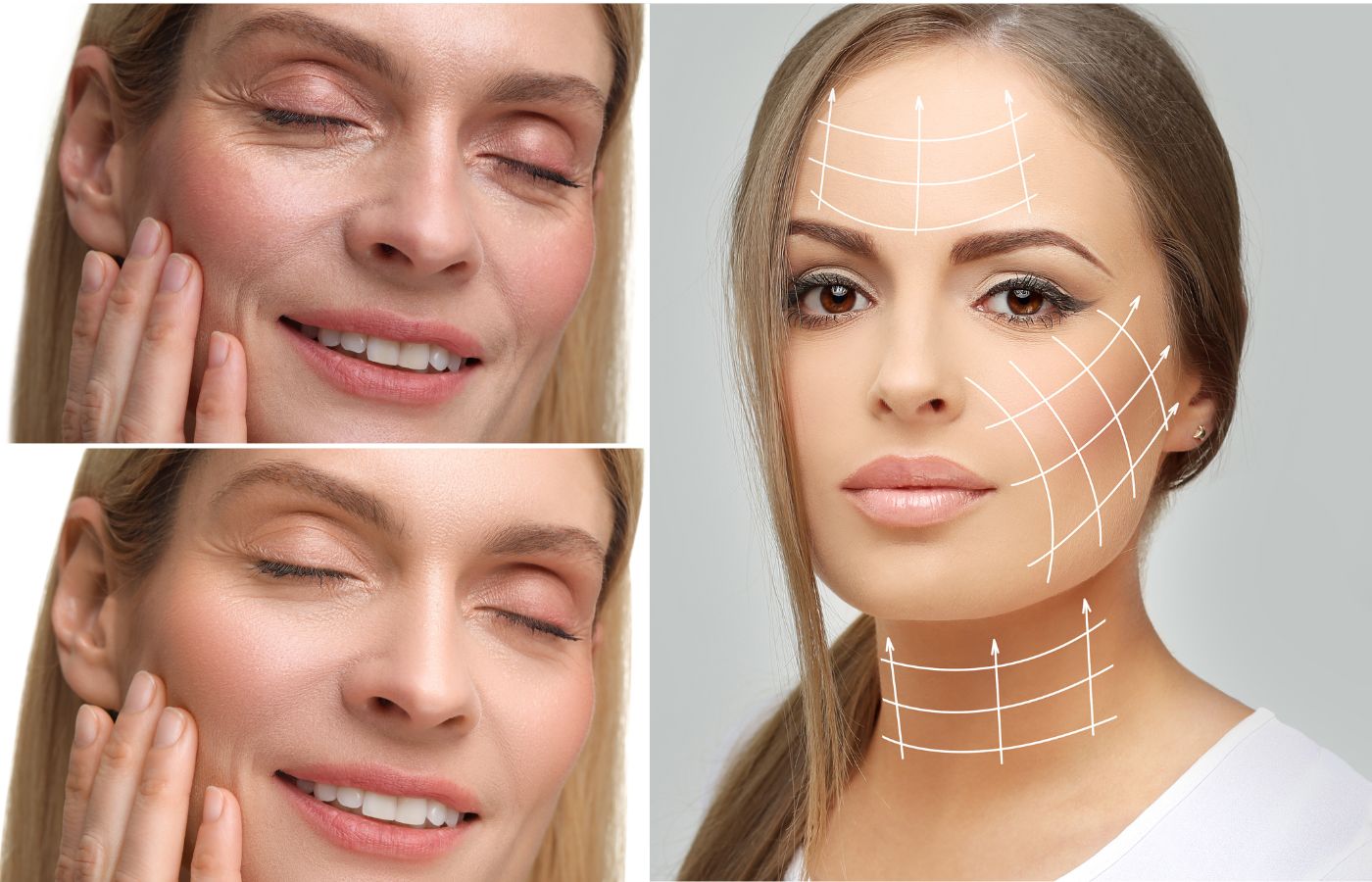
What you're seeing
Skin that looks and feels papery. Fine creases at rest that weren't there before.
Crepey texture is the visible result of skin losing structural support from below while simultaneously thinning at the surface. It appears first in areas where skin is naturally thinner — under the eyes, on the neck, the inner arms, and the décolletage — then becomes visible elsewhere as the process advances.
Unlike standard fine lines that track specific expressions, crepey texture is diffuse and irregular — tiny, random creases that appear at rest, independent of muscle movement. Moisturizer plumps the surface temporarily but cannot address the structural deficit that produces the texture.
The biology
Two layers failing — the dermis below, the epidermis above
The dermis provides the structural volume that keeps skin taut. As collagen and elastin decline and glycosaminoglycan levels drop, the dermis loses density and volume. The skin above it loses its structural support — there is less beneath it to hold it in place.
Simultaneously, the epidermis thins as cell turnover slows with age. The outermost layer becomes thinner, less resilient, and less able to maintain its smooth surface architecture. The combination — loss of structural support below and surface thinning above — produces the distinctive crepey texture that moisturizer cannot reach and surface treatments cannot reverse.
What the skin needs
Address both layers — the structural deficit below and the renewal deficit above.
The Structure Protocol addresses the dermal layer — GHK-Cu signals fibroblasts to produce collagen and restore the structural volume that crepiness reflects. The Renewal Protocol addresses the epidermal layer — EGF oligopeptides support keratinocyte proliferation, restoring the renewal cycle that keeps the surface architecture consistent.
Used as a stack in the same quarterly cycle, they address crepey texture at both its structural sources simultaneously. The approach is incremental — meaningful improvement builds over successive quarters as both layers respond.
Common questions
What causes crepey skin?+
Crepey skin results from simultaneous thinning of both the epidermis and dermis. The epidermis thins as cell turnover slows. The dermis loses volume as collagen and elastin decline. Without structural support beneath and consistent renewal above, the skin develops fine, loose creasing.
What age does crepey skin start?+
Crepey texture typically becomes noticeable in the 50s and 60s, though structural changes begin earlier. It appears first under the eyes, on the neck, and inner arm — areas of naturally thinner skin — before becoming visible elsewhere.
Can crepey skin be reversed?+
Severe crepiness with significant structural loss cannot be fully reversed non-invasively. Early and moderate crepiness can be meaningfully improved by addressing dermal volume loss (GHK-Cu) and surface renewal deficit (EGF-class oligopeptides) simultaneously.
What is the best treatment for crepey skin on the face and neck?+
The most effective non-invasive approach combines GHK-Cu to signal collagen production in the dermis and EGF-class oligopeptides to support keratinocyte renewal at the surface — addressing both layers of the problem simultaneously.
Recommended protocol stack
The Structure Protocol + The Renewal Protocol
GHK-Cu addresses dermal volume loss from below. EGF oligopeptides address epidermal thinning from above. Both layers of the crepey skin problem in one quarterly cycle.
← Back to database